

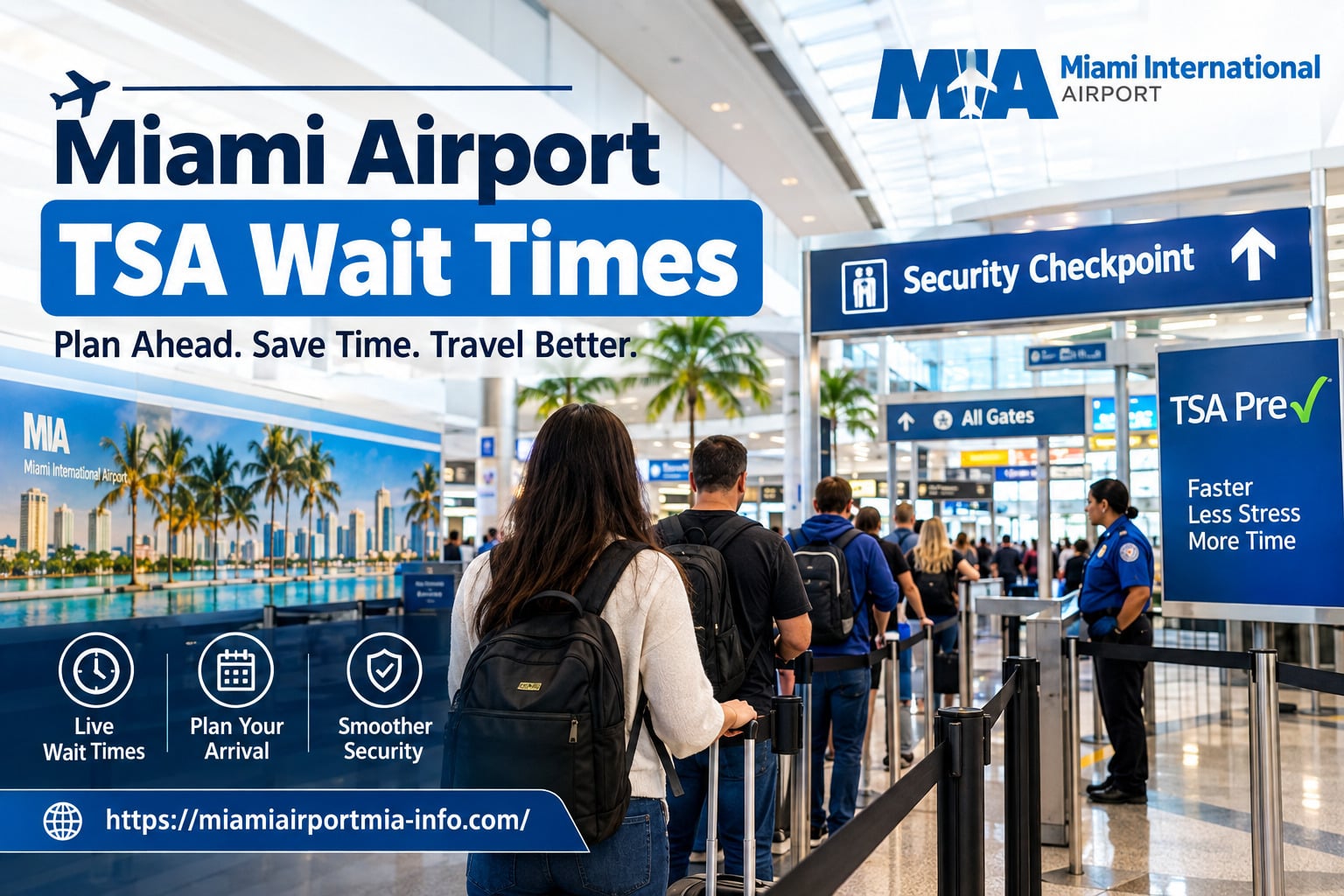

Arriving at a large international airport for the first time can feel confusing, especially when you are unsure how much time to allow for security. Miami Airport TSA wait times (https://miamiairportmia-info.com/wait-time/) can change throughout the day, which makes it difficult to build a reliable schedule based on a single estimate. Instead, first-time visitors should understand the complete airport process and prepare for each stage separately.
A little preparation before leaving home can make the experience more predictable and help you move through MIA with less confusion.
Know Your Airline Before Arriving
One of the first things to confirm is your airline and departure terminal.
MIA serves many airlines, and knowing where your airline operates can save time once you arrive. Instead of entering the airport and then searching for your airline, check your flight information beforehand.
Save your flight number on your phone and keep your boarding information easily accessible. This gives you a quick reference if you need to confirm your terminal, gate, or departure information.
Security Is Only One Part of Your Schedule
It is easy to make the mistake of planning your airport visit entirely around TSA.
In reality, your journey may include several separate stages:
Transportation → Terminal → Check-in → Baggage → TSA → Gate
Each stage can require a different amount of time.
For example, a traveler who needs to check a suitcase has an additional step that someone traveling with only a carry-on does not. Similarly, someone unfamiliar with MIA may need extra time to navigate the terminal.
Look at the Bigger Travel Picture
Rather than asking, “How long will TSA take?” consider asking, “How much time do I need from arriving at the airport to reaching my gate?”
This broader question produces a more useful travel plan.
Even if security is moving efficiently, you may still encounter traffic getting to MIA, a line at the airline counter, difficulty finding the correct area, or a longer walk to your gate.
Planning around the complete journey helps prevent one short delay from affecting the rest of your schedule.
Prepare Your Carry-On in Advance
Your preparation at home can influence how organized you feel at security.
Before heading to the airport, review the current TSA requirements and arrange your belongings accordingly. Keep items organized inside your carry-on rather than mixing everything together.
If you are carrying liquids, electronics, medications, or other items that may require attention, check the applicable rules before your trip.
The goal is simple: arrive at the checkpoint already prepared instead of trying to figure everything out while standing in line.
Check Current Information on Travel Day
Airport conditions can change, so information from a previous trip should not automatically be treated as today's situation.
Before leaving for the airport, review your flight information and available security updates. If your schedule has changed, you can adjust your plans before reaching the terminal.
This is particularly useful during busy travel periods when passenger activity may fluctuate significantly.
Allow Time for Terminal Navigation
First-time visitors sometimes underestimate the time required to find their way around a major airport.
After completing security, you still need to reach your departure gate. Depending on your location, that may involve walking through a large terminal area or using airport transportation options.
Checking an airport map before your trip can help you understand the general layout and reduce unnecessary wandering.
What About Connecting Passengers?
Passengers connecting through Miami may have a different experience from travelers beginning their journey at MIA.
Connection time depends on factors such as your arriving flight, departing flight, terminal location, baggage arrangements, and whether another security procedure is required.
If you have a connection, check both flights rather than focusing only on the departure time of the second flight. A short connection leaves less flexibility if your first flight arrives late.
Keep an Eye on Your Boarding Time
Your boarding time deserves attention because you need to be at the gate before the aircraft's scheduled departure.
If you spend your entire available time waiting for security and only then begin looking for your gate, you may create unnecessary pressure.
Once you pass TSA, check your flight information again and head toward your gate without unnecessary delays.
Consider Different Passenger Needs
Airport planning should reflect your individual situation.
A business traveler with one small bag may move through the airport differently from a family with children and several suitcases. Older travelers or passengers requiring accessibility assistance may also need additional time.
There is no single schedule that fits every traveler. Build your plan around the actual steps you expect to complete.
Flight Information Can Add Useful Context
Travelers checking Miami Airport arrivals may want to monitor airport flight activity before their own departure. This can help you stay aware of changes at the airport, but arrival information should not be considered a direct measurement of TSA conditions.
Security activity and flight operations are related parts of the airport environment, but they are not the same thing.
Create a Comfortable Airport Routine
For regular MIA travelers, a consistent routine can make each trip easier.
Before leaving home:
Confirm the flight.
Check the airline and terminal.
Review current airport information.
Prepare your carry-on.
Allow time for transportation and check-in.
Leave enough flexibility for security and terminal navigation.
This approach is more dependable than trying to predict an exact security-line duration.
Final Planning Tip
Miami Airport TSA wait times can be useful when deciding how much time to allow for security, but they should always be considered alongside the rest of your airport schedule. Transportation, check-in, baggage, terminal navigation, and boarding can all affect your total travel time.
For practical airport guides, travel information, and helpful resources for navigating MIA, visit miamiairportmia-info( before your next journey.(https://miamiairportmia-info.com/)